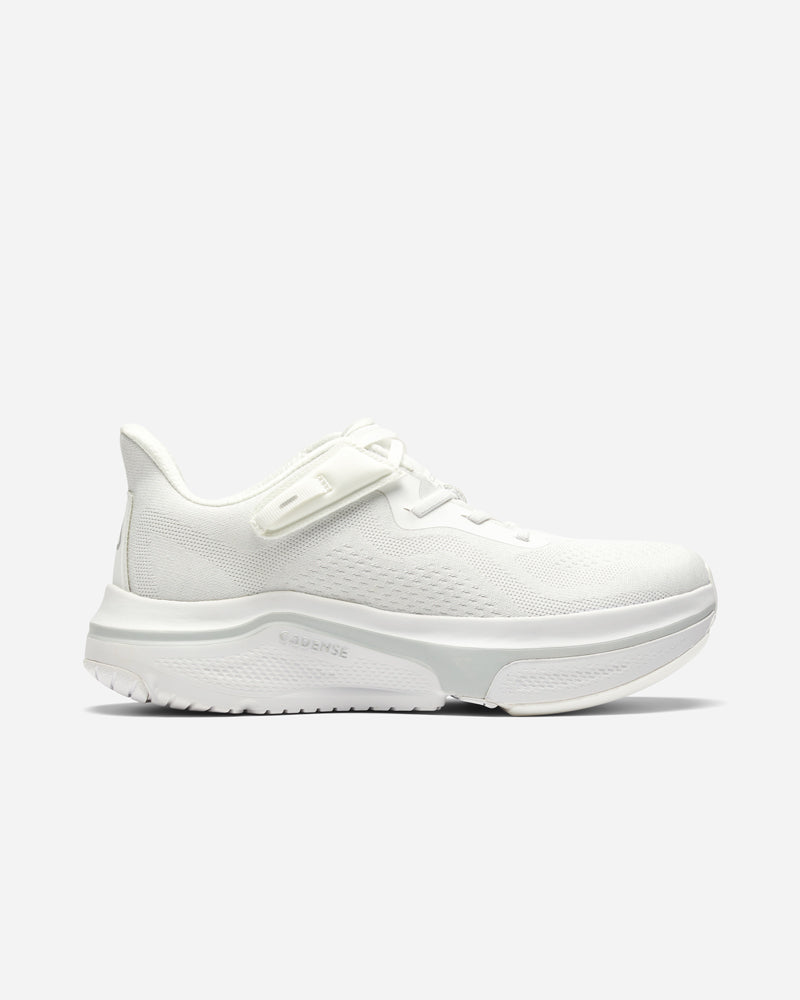
I’m always on the lookout for a new style of shoe, one that can handle the unique demands of a person with multiple sclerosis (MS).
I need a shoe that will prevent the toes of my left foot from catching on a rug or a curb due to my foot drop and that will allow me to stand comfortably for several minutes without exacerbating my usual leg fatigue. I need a shoe that moves smoothly between the brake and the gas pedal when I’m driving and one that adds the minimum weight to my already leaden legs.
So, when the people who designed the Cadense® adaptive shoe offered to give me a free pair to review, I figuratively jumped at the chance.
The Cadense shoe, designed by 2 mechanical engineers, purports to be useful to people with conditions that can make walking difficult, particularly due to foot drop. According to the Cadense website, two nylon pucks raised above the sole enable gliding over obstacles. Applying pressure to the front of the foot makes the pucks retract for easier stopping.
A very small 2019 pilot study that tested the shoe in 5 people with foot drop caused by neurological problems found that it “immediately improved gait mechanics, speed over ground, and qualitative gait comfort.”
Tested by Tobias
I have severe foot drop on my left side and walk with 2 canes. Sometimes I also wear a Bioness L300Go® functional electrical stimulator. Late last year I wore the Cadense shoes for about a month, without the Bioness, usually for 14 or 15 hours a day. I walked with them indoors, over hard floors and carpets. I also tested them on sidewalks, while stepping on and off curbs, and while driving.
The big selling point of the Cadense shoes is that they do help with foot drop. As advertised, the nylon pucks allowed me to slide or drag my left foot without my toes catching.
They don’t do everything, of course. The shoes aren’t designed to flex my ankle to raise my toes, like my Bioness or an ankle foot orthosis, and they didn’t.
Although I didn’t notice any improvement in my balance while walking, I found that the shoes did help me balance while standing still or pulling a shirt over my head. They also seemed to help me to stand up straighter and may have lessened my low-level back pain. Cadense says the shoes aren’t designed to directly improve balance, but it says that many people with MS or Parkinson disease, or who are recovering from strokes, have found that they reduce the risk of tripping.
The size 8 shoes I requested were tight at first, but after about 2 weeks of wearing in, they became very comfortable. They generally weigh 10 to 12 oz, depending on the size, and have 1.5-in soles. Velcro® tabs help secure their laces, making them easy to put on and take off.
What do others report about Cadense?
One person on social media disliked the thick sole, finding that it didn’t help with stability, and didn’t feel that the shoes slid all that well, either. “Then there’s the noise,” the poster wrote. “I walk on some sand on a sidewalk, and it sounds like 4th of July snappers.”
Several others reported these clicks, and I noticed them as well.
Others posted:
“I am able to walk farther with them on. I definitely recommend them.”
“I feel free. I feel human. I can wear shoes again. The muscle pain in my feet & ankles is gone because I now have support.”
“They keep me from catching my toe so they do exactly what they say they will do.”
Final Thoughts
I agree with the positive social media reviews, but I have a few concerns. One poster says he was told not to wear the shoes in the rain. That’s a problem for me.
There’s also the question of how long they will last. The Cadense website claims the shoes can last a year or longer if they are used on smooth surfaces and receive no more than light scuffing. But with heavy use on rough surfaces, the website warns, they may last only a few months. People who need help walking are likely to be tough on any shoe, so we’re probably in the “few months” group.
The shoes do help with some things, such as foot drag, and I appreciate that the Cadense people have been clear about how long they’re likely to last. But $199 may be a lot for some people to spend on shoes with such a potentially-short lifespan. You’ll have to decide for yourself whether the benefits are worth the expense.
What are your thoughts?
(A version of this post first appeared on the Rare Disease Advisor website.)
(Have you checked out my book, yet: The Multiple Sclerosis Toolbox).